The Hook
A viral tribute to the classical Chinese art of "listening to rain" evokes poetic nostalgia, yet评论区 reveals a stark divide. While some see spiritual elegance in Suzhou’s drizzle, others face the humid reality where romance meets mold, creating a fascinating clash between aesthetic ideals and sensory truth.
The Story
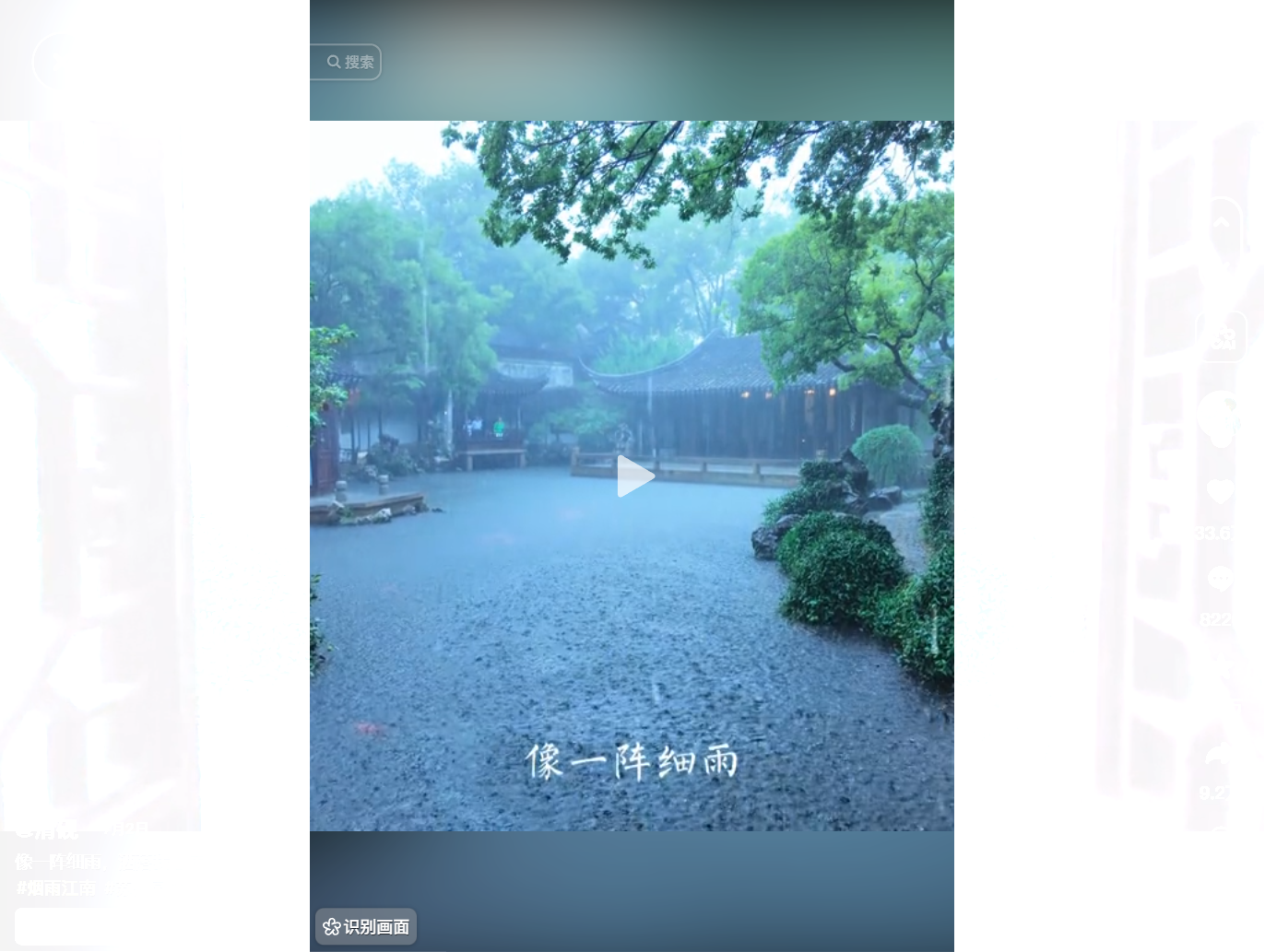
The video captures the quintessential Jiangnan aesthetic, framing Suzhou’s classical gardens through a veil of misty rain. Pavilions and winding corridors dissolve into soft focus, embodying the traditional pursuit of harmony between nature and inner peace. The narration, describing rain as falling "deep into my heart," targets a collective cultural memory of elegance involving incense, tea, and guqin music. However, this curated tranquility collides with lived experience in the comments section. The digital discourse transforms the garden from a purely visual sanctuary into a contested space where ancient refinement battles modern discomfort. Viewers are not merely passive consumers of beauty; they are active negotiators, weighing the spiritual nourishment of the soundscape against the visceral annoyance of damp clothes and mosquitoes. The content thus becomes a mirror reflecting the tension between inherited cultural aesthetics and contemporary physical realities.
The Voices
01. The Aesthetic Ideal vs. Humid Reality
"It's so humid I don't have enough dry pants to wear"
"Stop raining already—I'm about to grow gills!"
"Enough with the rain—my car's gone moldy!"
Think Tank Insight: This dominant sentiment highlights the friction between cultural performance and biological limitation. The romanticization of Jiangnan rain often omits the tactile misery of high humidity. Comments reveal that for many, the "elegant pursuit" is unsustainable without modern climate control, suggesting traditional aesthetics now require technological mediation to remain pleasurable rather than oppressive.
02. Generational Shifts in Cultural Identity
"People in their 20s have their own tastes, people in their 30s start understanding tea"
"I used to think listening to rain was an elegant pursuit... until I had to commute"
"The North has its own Jiangnan too—it's all about the mindset"
Think Tank Insight: Audience engagement reflects a maturation process where appreciation for traditional elegance is increasingly viewed as age-dependent or privilege-dependent. Younger demographics negotiate identity by acknowledging these tastes as acquired rather than innate. Furthermore, the redefinition of "Jiangnan" as a mental state rather than a geographic location indicates a democratization of cultural capital beyond regional boundaries.