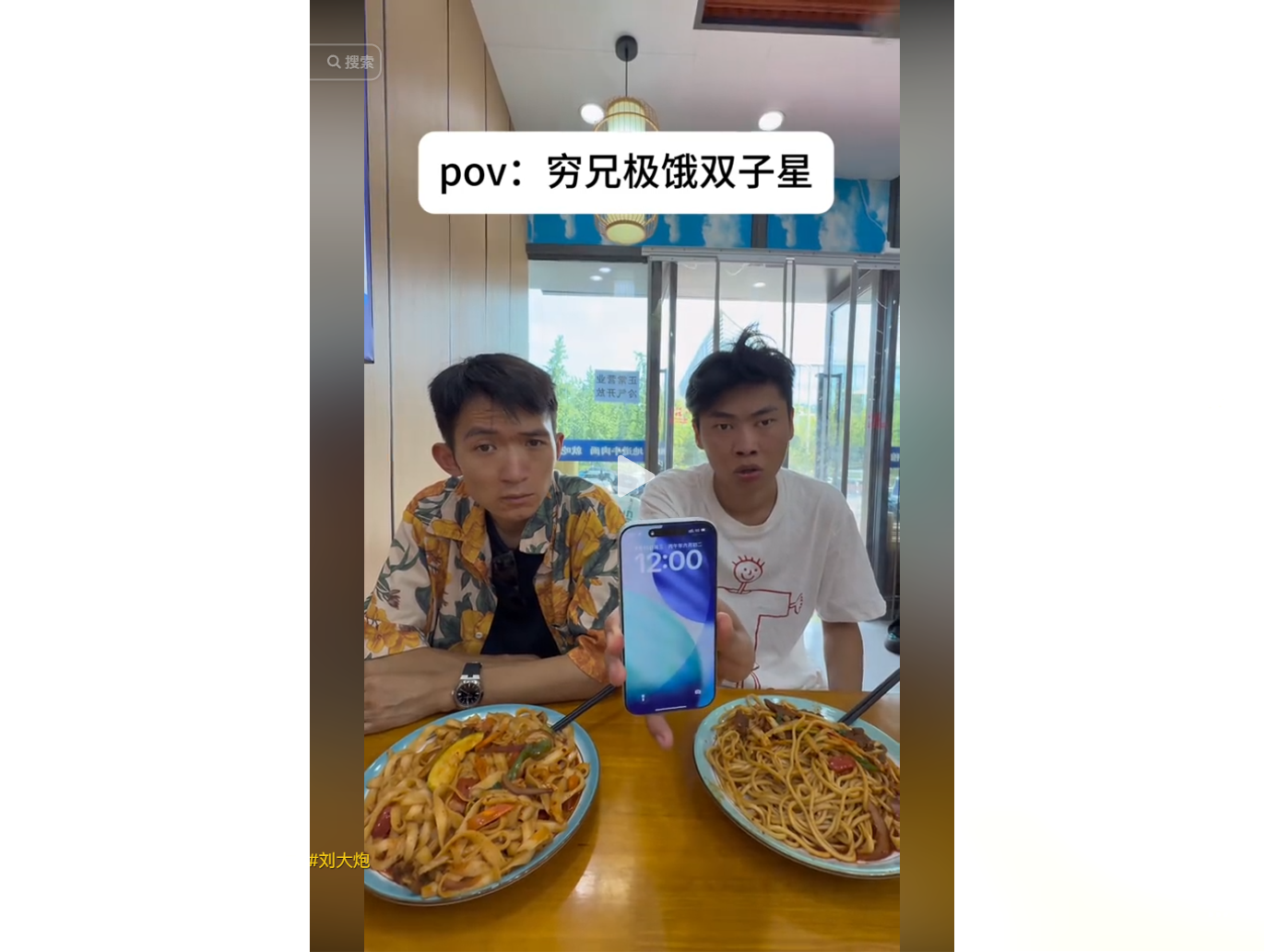
The Hook
Two influencers devour massive meals in minutes, but the real spectacle unfolds in the comments. Viewers have hijacked the narrative, transforming a gluttonous display into a collective digital intervention where engagement metrics are weaponized to demand the creators quit their self-destructive performance.
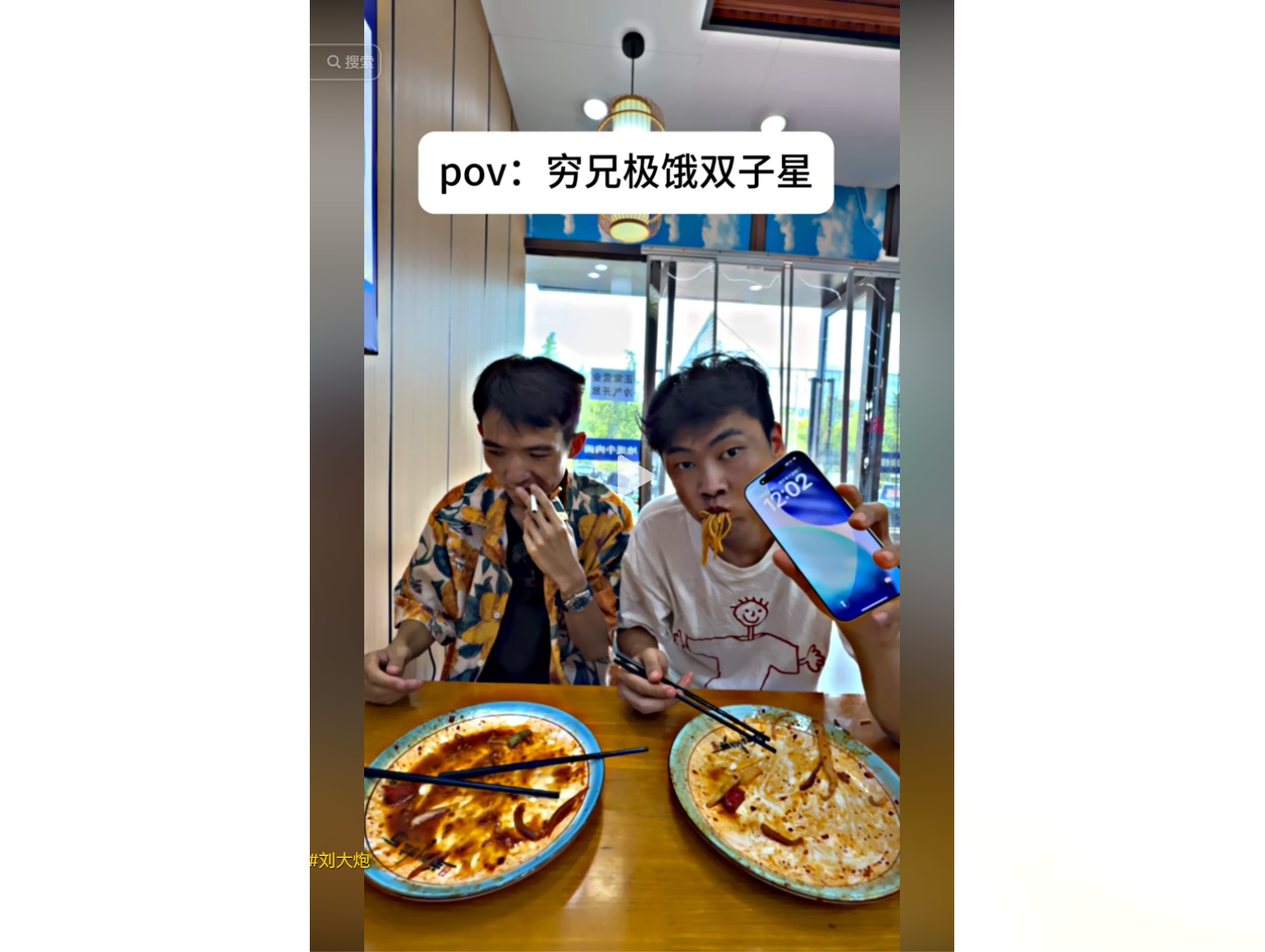
The Story
The video titled "Poor Brothers, Extreme Hunger" presents a visceral scene of competitive eating, featuring protagonists Lubao and Liu Dapao consuming enormous portions of noodles and rice in under two minutes. While the visual hook is extreme gluttony followed by a post-meal cigarette or coffee ritual, the subtext reveals the brutal machinery of the influencer economy. Behind the voracious appetites lies a tale of industry ruthlessness; former partner Lao Liao was discarded due to poor data analytics, only to resurrect his career through authentic agricultural livestreaming. Meanwhile, Liu Dapao pivots to manufacturing new traffic IPs like "Broken Brother," exposing how personal relationships are sacrificed at the altar of algorithmic relevance. The content serves as a stark diorama of grassroots desperation, where physical health is bartered for fleeting digital attention, and authenticity becomes just another calculated metric in a landscape defined by turnover and trend-chasing.
The Voices
01. Gamified Intervention as Digital Care
"One like = quit for a day; one reply = run 1 km..."
"Guys, please stop liking! I thought only a few ..."
Think Tank Insight: This represents a paradigm shift in parasocial interaction. Audiences are no longer passive consumers but active regulators, repurposing engagement metrics as punitive tools. By gamifying withdrawal, viewers transform toxic consumption into a collective rehabilitation project, signaling deep fatigue with performative self-harm and a desire for ethical content boundaries.
02. Existential Dread Beneath the Spectacle
"Life is only 30,000 days long, and you've alrea..."
"Two more hours until 6 o'clock."
Think Tank Insight: Comments reflect a profound projection of audience anxiety onto the creators. The fixation on time and mortality suggests viewers perceive this extreme eating not as entertainment, but as accelerated aging. The spectacle triggers existential dread, revealing that the audience’s fascination is rooted in mourning wasted potential rather than celebrating excess.