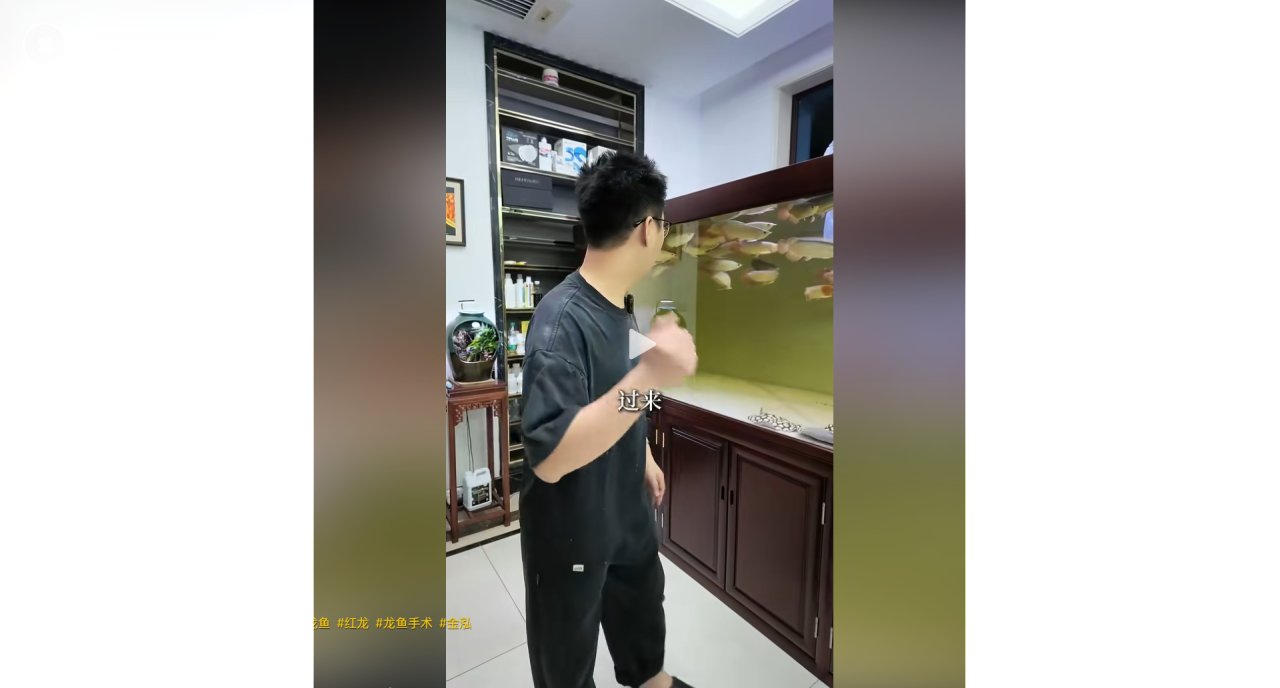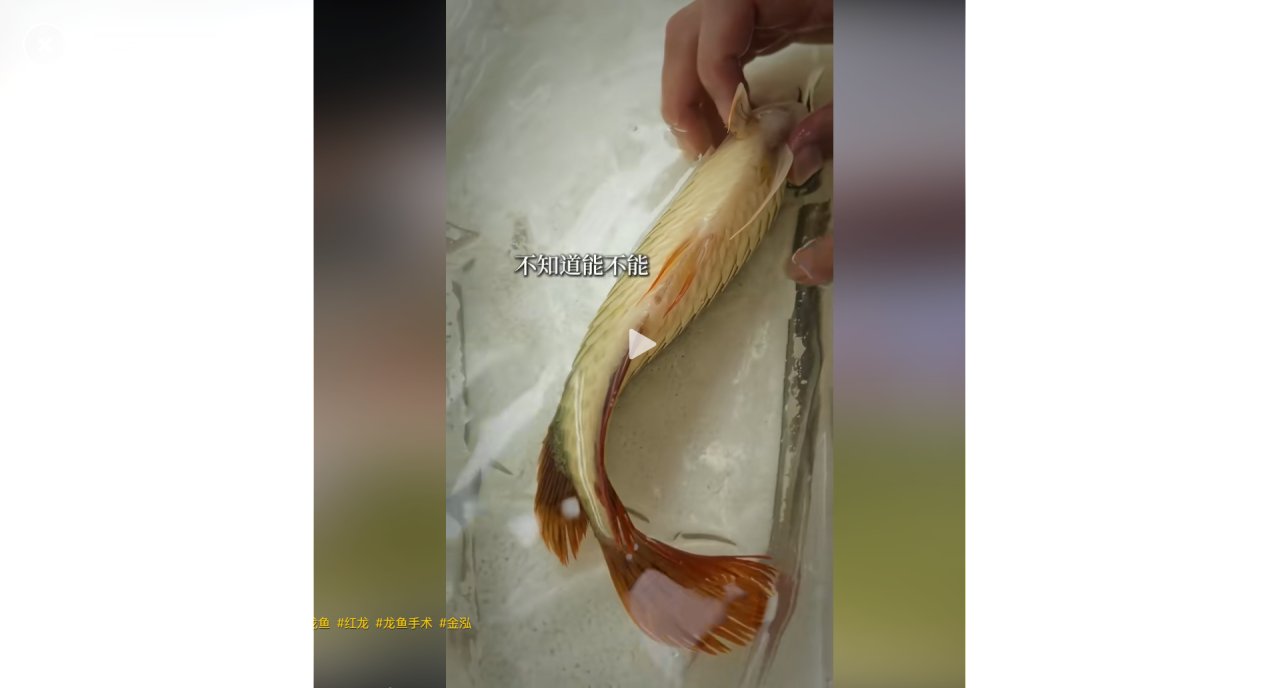
The video stops on a frame that feels deceptively calm. A young man in black slippers and a loose T-shirt stands before a large aquarium, his hand half-raised in a gesture of invitation. The subtitle reads “Come here.” Inside the tank, several silver-yellow arowanas—*Scleropages formosus*—drift toward him, heads aligned as if waiting for a treat. It’s a moment of quiet routine, the kind you see in any hobbyist’s room: shelves lined with bottles, a red wooden stand holding a smaller glass bowl, the soft hum of water filtration. But the caption overlay tells a different story. It claims this fish was just rescued from a catastrophic illness, its scales blown out like pinecones, its stomach removed through surgery. The contrast is jarring. We expect panic, sterile labs, or frantic emergency calls. Instead, we get a guy in slippers calling his fish back to the surface.
What the Comments Are Really Asking
Scrolling down the comment section reveals what parents and hobbyists are actually worried about. One user asks, “Can it survive without a stomach bag?” Another admits, “Dropsy really gives me goosebumps just looking at this.” These aren’t idle curiosities; they’re reflections of a deeper anxiety about invisible biological failures. When a child sees a sick pet—or even hears about one—the questions come fast and often out of order. “Why is the fish still alive?” followed immediately by “How does it eat now?” There’s no logical sequence, just a chain of wonder and fear. Adults might try to smooth these over with reassurance, but the kid wants the raw mechanism. They want to know why the naked eye misses the problem until the scales pop, and how a body can reorganize itself around a missing organ.