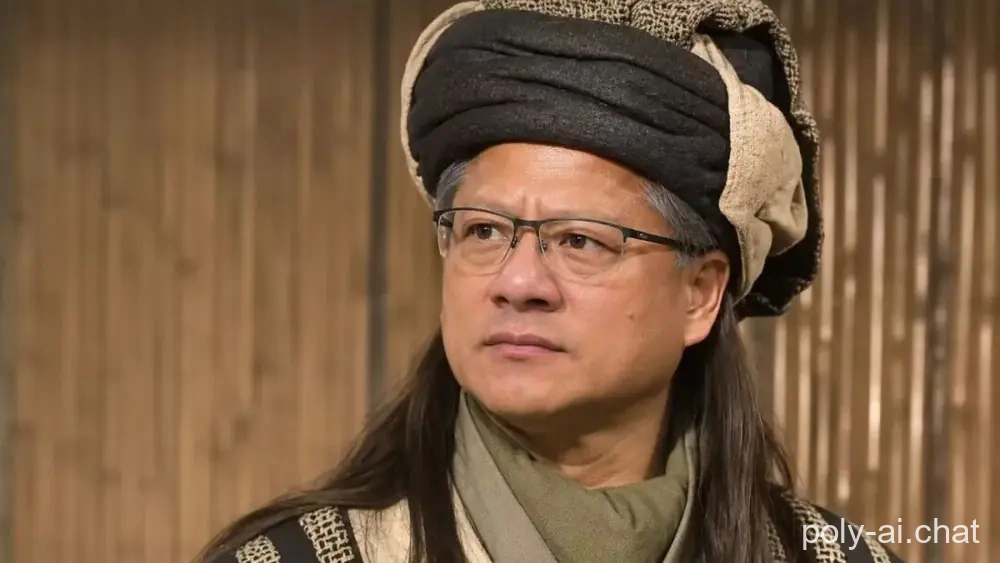
On November 23, NVIDIA's board voted unanimously to restore Jensen Huang as president, chief executive and board member, effective immediately.
Seven days earlier, the same board had ruled the possibility out. The announcement came from Santa Clara in the afternoon, Pacific time, and it read less like a victory than like a settlement.
The company said the board had held a series of discussions and meetings with Huang, recognized his candor and his ability to lead, and concluded that restoring him served the best interests of shareholders, employees, partners and customers. It also said the decision followed consultation with senior levels of the US government, which judged that the return raised no national security risk.
Board chair Harvey C. Jones called Huang the right person to lead NVIDIA and said he had full confidence in him. Colette Kress, who had been running the company as interim CEO, stays on as chief financial officer. Jones stays on as chair.
Huang said he was honored to return at the start of a new industrial revolution, that he would carry the responsibility with humility and a fresh commitment, and that he could not wait to get back to work.
The part of the announcement that matters more
The first four paragraphs are the ceremony. The rest is the price.
The same release says the investigation by a committee of independent directors and an independent law firm will continue to the end, with Huang cooperating fully throughout. It announces a new National Security and Export Control Committee, made entirely of independent directors, to oversee trade compliance and national security risk. It announces a search for a chief compliance officer, reporting to the nominating and governance committee. And it says the company will keep cooperating with government investigations and inquiries.
Read that again: he gets the title back, and the board gets a compliance officer, a standing committee and an unfinished investigation. The founder returns as a CEO under supervision.
The question was never "can he come back"
The version of this story that circulated for a week was a hero's return: Silicon Valley rallies, employees cheer, the board caves.
The mechanics were less romantic. Huang held about 3.58% of NVIDIA. He had no super-voting shares. Reports at the time said plainly that he could not overturn any decision the board made. His return did not depend on how badly he wanted it; it depended on whether the board wanted to say yes.
The board's leverage was procedure, not popularity. It had retained a former federal prosecutor, Joon H. Kim, and the law firm Wachtell to run an independent investigation whose core question was not the affair itself but whether national security was compromised. It had a duty to shareholders, a succession process, and no obligation to care about a petition.
The pressure was real, and it was loud. Elon Musk and Epic's Tim Sweeney signed a letter asking the board to restore him. Altimeter's Brad Gerstner and Atreides' Gavin Baker publicly urged the board to keep every option open, including his return. Allies were assembling a war room, lobbying directors and trying to win the White House. An employee-run vote had more than 97% backing his return — a number with no legal force whatsoever. Trump said he would not mind seeing him back and that Huang had learned a hard lesson.
Opposition inside the government was also real. The Treasury Secretary had publicly called for a major overhaul of NVIDIA's leadership and suggested looking outside the company for a CEO. Compliance culture and China chip controls were the subtext, and during an open investigation those questions get louder, not quieter.
So the informed bet, a week ago, was: not yet. The report had not landed. The board had no cover. The White House was split.
Then the numbers arrived
NVIDIA reported its fiscal 2027 third quarter, ended October 25 — the first quarter without him. Revenue was $115.8 billion, up 103% year over year. Data center revenue was $107.6 billion, up 110%, about 93% of the total. GAAP net income was $65.3 billion, up roughly 105%. Guidance for the fourth quarter was $130 billion, plus or minus 3%, above consensus. The company authorized another $150 billion in buybacks, leaving about $227.3 billion available.
Those are the numbers of a company that does not need a founder.
The stock disagreed. It closed at $155.46, down 0.44%, rose 4.81% after hours, then fell more than 3% the next day. Over the prior five sessions it had dropped more than 10%; over the prior month, 29%, giving back every gain since June 2025 and more than a trillion dollars in market value. Traders expected the earnings alone to swing about $335 billion in value.
The market was not pricing the quarter. It was pricing the vacancy. A CFO can run a quarter. A CFO cannot stand in front of a supply chain, a CUDA ecosystem and a set of government relationships built over thirty-three years and tell everyone the plan is fine.
The option the board could not ignore
By November 20, the story had acquired a second track: reports that Huang was preparing to found a new semiconductor company, and that the effort could raise $50 billion.