The classroom door slid open, and the girl standing there was not a teacher in any traditional sense. She wore the costume of an anime character so perfectly that the line between fiction and reality dissolved into static. This was the finale of a three-part series where the central conflict wasn't about grades or graduation, but about the sheer audacity of being oneself in a space designed for conformity.
She sat at the desk, reading comments from her own video. The audience watched as she addressed the chaos with a smile that didn't quite reach her eyes, or perhaps it did, depending on who you asked. The premise was simple: a cosplayer posing as a teacher, blurring the lines of identity until the viewer could no longer tell if they were watching a skit or a confession.
Identity Hijacked
The comments section became a second stage. Viewers argued over who was speaking, who was hiding, and whether the account had been sold. One user noted, 「Soda finally sold her account to Shanshan」, while another cried out, 「I can't believe Soda isn't male!」. The confusion was the point. In a world where digital personas are fluid, the idea of a fixed identity felt quaint, even absurd.
This disorientation extended to the plot itself. Was this educational content? One commenter wrote, 「This episode has educational value」, dripping with sarcasm. Another asked, 「Which school is this?」, treating the surreal setting as a real location to be mapped. The narrative refused to settle. It hovered between a comedy sketch and a philosophical inquiry, leaving the audience to decide which lens to apply.
The L Meme and Abstract Humor
Amidst the identity crisis, references to *Death Note* appeared like ghosts. 「What does 'L' mean?」 one person asked, confused by the cryptic letter. Another replied, 「Probably Death Note」, connecting the dots through pop culture osmosis. The humor was abstract, jagged. Some found it rough, noting, 「Still abstract, but the plot is a bit rough」. Others leaned into the absurdity, joking, 「The video is so absurd it looks AI-generated」.
The dialogue between these interpretations created a feedback loop. The creator’s intent—to convey that one should live how they please—was filtered through layers of irony. When someone commented, 「Careful, or I'll plant you in the ground」, it wasn't a threat, but a playful acknowledgment of the chaotic energy radiating from the screen. The vibe was great, even if the logic was fractured.
| Emotional facet / observation dimension | Group consensus share |
|---|---|
| Gender Identity Reversal | 45% |
| Account Hijacking and Identity Confusion | 30% |
| Abstract Humor and Plot Commentary | 25% |
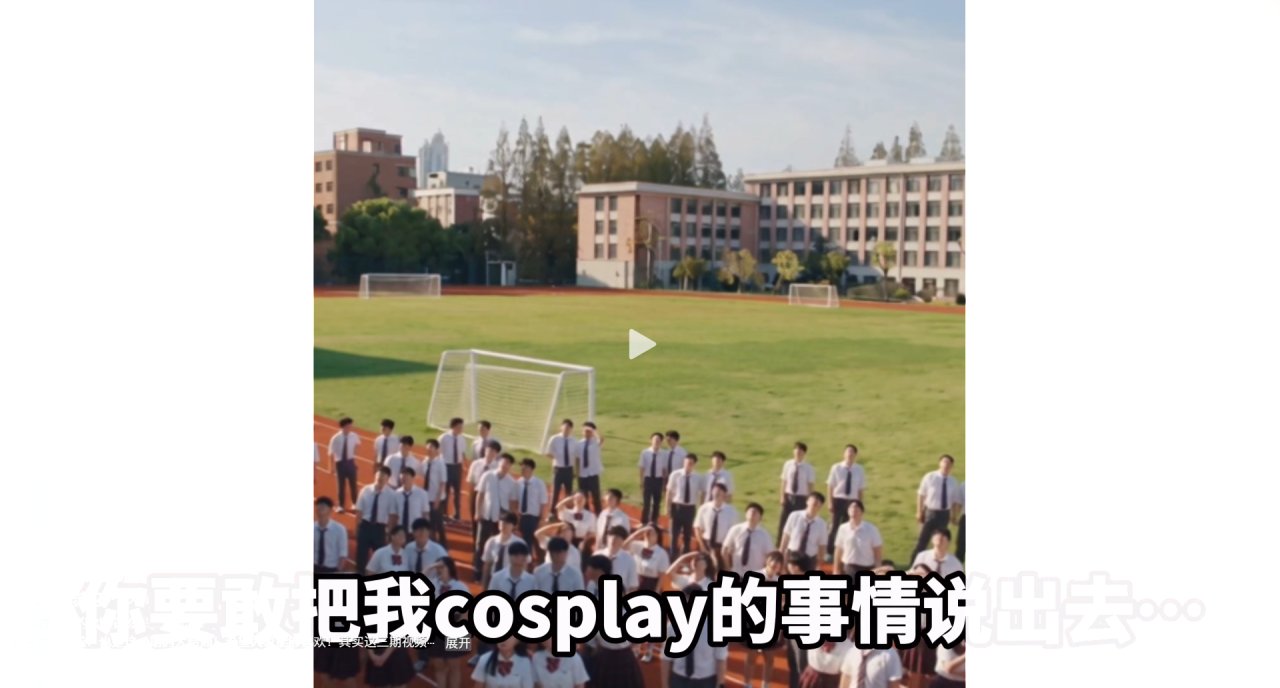
Flashpoint: Authenticity vs. Absurdity
The sharpest disagreement lay in the perception of effort. On one side, viewers saw a polished performance, praising the cosplay: 「Perfect for cosplaying as Shu」. They appreciated the aesthetic precision, the way the character came to life. On the other side, critics dismissed it as lazy or algorithmic, claiming, 「Wait, why is there no AI disclosure in this video?」. They questioned the source of the creativity, wondering if human intention existed behind the pixels.
This clash highlighted a modern anxiety: when something feels too perfect or too strange, do we trust it? The comment 「I was even looking for AI prompts」 suggests a desire to decode the magic, to find the manual behind the miracle. Yet, the core message remained stubbornly human: 「你所热爱的就是你的生活!!」 (What you love is your life!!). The medium was digital, but the sentiment was analog.
Palmbox Experience
While this story ends here, the exploration of identity doesn't have to stop. In Palmbox, you can choose different endings for similar scenarios. Imagine if the teacher never revealed herself, or if the students joined the cosplay instead of judging it. The platform allows you to navigate these branching paths, turning passive viewing into active storytelling. You don't just watch the drama; you inhabit the choices.
Final Frame
The rain mentioned in the comments—「I want that rain too」—symbolizes the cleansing effect of letting go. To care less about judgment is to invite the storm and dance in it.
Live loudly.