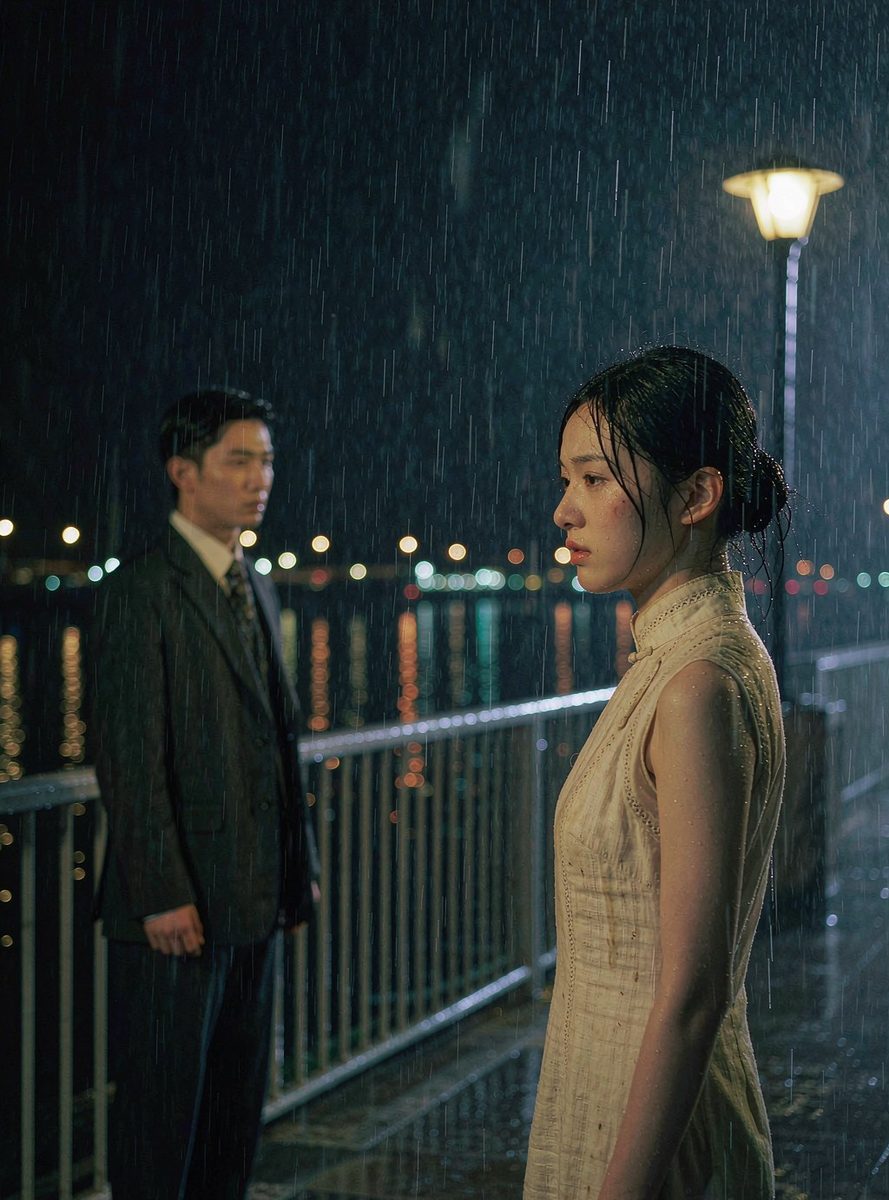
Five Years of Hate, a Lifetime of Regret* is a 50-episode revenge tragedy that has been climbing the Vertical 52 weekly chart for three straight weeks — from fifth place, to fourth, to number two right now with about 42.7 million views, and in the most recent trending week it was the single fastest-growing drama on the entire chart, adding roughly 16 million views in seven days. The title tells you the shape of it. **Dominic, a mafia boss, imprisons and tortures his own fiancée Elena for five years, convinced her parents' drunk driving killed his family. She was innocent. By the time he understands that, she has walked into a river.
This is not a love story with a dark phase
I want to be precise about what kind of drama this is, because the packaging will lie to you. The genre tags say toxic love and forced love, and both are accurate, but the show is not a redemption arc where cruelty becomes tenderness and everyone learns something. It is a tragedy built like a countdown. You spend fifty episodes watching a man be wrong in the worst possible direction, and the show never lets you forget what the audience knows and Dominic does not: Elena did nothing.
That dramatic irony is brutal, and it is the whole engine. When he punishes her, you know she is innocent. When she cries, you know she is crying about a crime that never happened. When she stops defending herself — and there is a point where she does — you understand it as surrender to a verdict that was decided before the trial. Most revenge dramas make you wait for the hero to strike back. This one makes you wait for the hero to simply be believed, and it never quite happens in time.
Elena is the center of gravity, not Dominic
The surprising craft choice is where the camera lives. A forced-love premise like this could easily become a showcase for the man's pain, his anger, his eventual remorse. Instead the show keeps Elena at the center. Her five years are the story: what she remembers, what she stops hoping for, the small dignities she protects, the moment she chooses the river. Her death is not a plot twist. It is the logical endpoint of everything the show has shown you, staged quietly enough that it lands like a door closing.
And then the structure inverts. Dominic's realization — that his love for her only arrives after her death — is drawn out over the final episodes with a patience most dramas in this format cannot afford. His regret cannot undo anything, and the show refuses to pretend otherwise. There is no resurrection, no second chance, no secret survivor twist. What is broken stays broken. That refusal is exactly why the title ends on regret instead of reunion.
Why it is climbing instead of fading
18px;orphans:2;text-align:start;text-decoration-color:initial;text-decoration-style:initial;text-decoration-thickness:initial;text-indent:0px;text-transform:none;white-space:normal;widows:2;word-spacing:0px;">The chart behavior tells you how audiences are responding. It premiered on October 19 alongside bigger-budget releases, and for its first chart week it looked like the less flashy sibling — fifth place, around 31.8 million views. Then it moved up every single week: fourth, then second, passing shows with three times its view count, and posting the largest weekly gain of any drama on the board. A one-week spike is marketing. Three consecutive weeks of climbing is word of mouth.
And the word of mouth is exactly what you would expect: people finishing it angry, devastated, and unable to stop telling other people what happens. This is the drama equivalent of a novel you hand to a friend in silence. The tropes are extreme — imprisonment, torture, innocent sacrifice — but the emotional mechanics underneath are ordinary and recognizable: what happens when someone you trust decides you are guilty, and how much evidence it takes to change a mind that has already decided. The show takes that question to its darkest conclusion.
The genre context makes it stand out more
Look at the rest of the current top five and you see billionaire flings, hidden heirs, academy romances — shows where the ending is engineered to satisfy. This one sits at number two while promising you from the title that there is no satisfaction coming. It is the darkest show near the top of any weekly chart right now, and it is there because audiences keep choosing it, not because anyone is being tricked into it.
The 50 episodes run tight, most under two minutes, and the pacing has the confidence of a story that knows its ending from the first frame. Nothing is padded. Every humiliation Dominic inflicts is a payment toward the grief he will eventually owe, and the show keeps the ledger visible.
Who should actually watch this
Be honest with yourself about the ending before you start. If you need the couple to end up together, if injustice has to be repaired on screen, skip this one — it will leave you in a bad place. But if you have ever wanted a short drama that treats regret as a real, irreversible force, this is the strongest example currently running. Watch it for Elena, who is written with more interior life than the format usually allows victims, and watch it for the final episodes, which handle a man understanding his own guilt with a restraint that genuinely surprised me.
One practical note: keep the tissues unironically. The show is about an hour and a half in total across the fifty episodes, and it is best watched the way it was built — in one sitting, alone, with the ending allowed to sit there and do its work.

When you want a tragedy that does not flinch, open Reeleasy and browse — some stories stay with you after the screen goes dark.