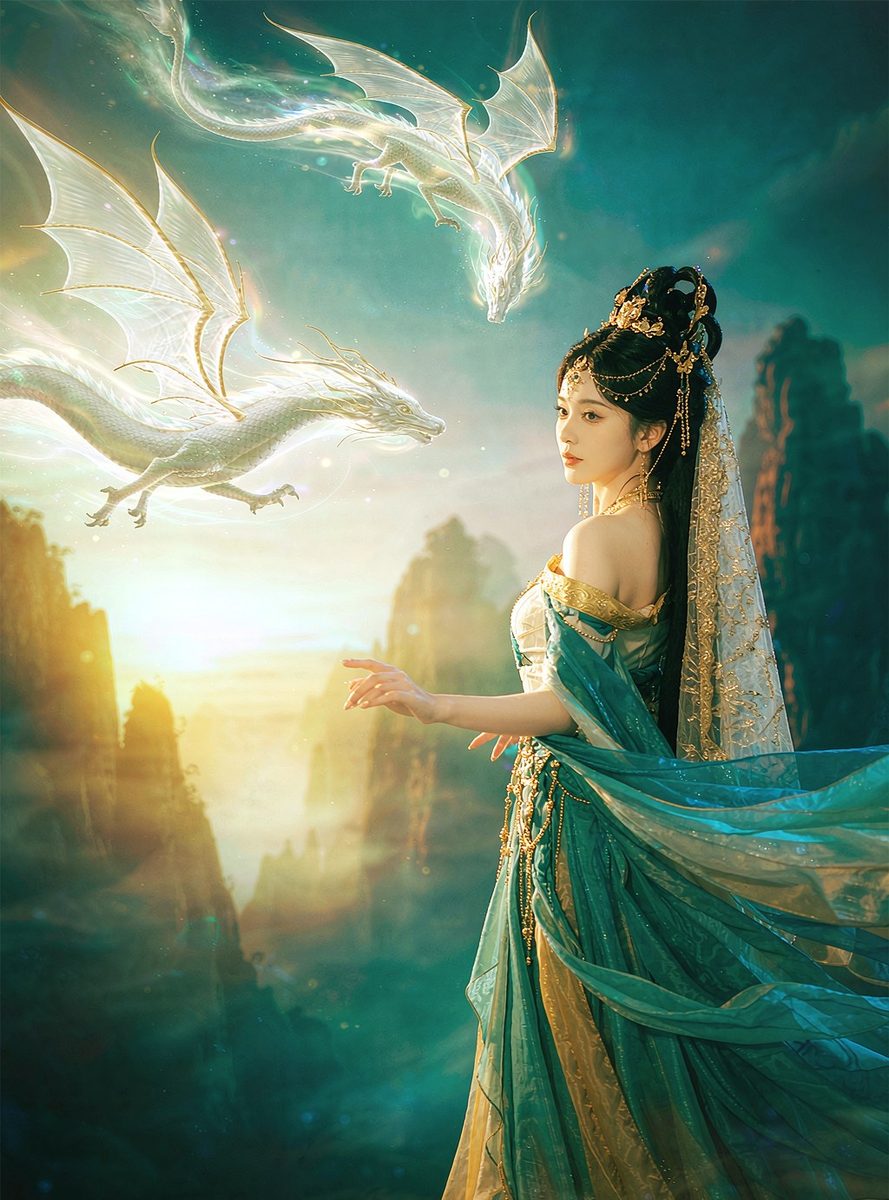
Three Little Dragons, One Secret Heir* is a 70-episode fantasy revenge romance released in early November 2026, and it is the most interesting experiment currently running in the format — a fully AI-generated production that plays the classic betrayal-to-throne arc at mythological scale. The opening is as cruel as the genre gets. **Serena Ashborne, princess of the Vale Kingdom, is mocked by her own court and despised by her fiancé. Her fiancé and her stepsister Celeste rip the Dawnfire Core out of her body, believing it is an ancient phoenix blessing they deserve more, and throw her into the Abyssal Rift to die. She does not die. She gives birth to three dragonlings.
The betrayal is the oldest trick, upgraded with dragons
The first act follows the disgraced-princess blueprint you know — the overweight princess nobody respects, the scheming stepsister, the weak fiancé — and then keeps escalating. What the thieves stole was never a phoenix blessing. It is the Dawnfire Dragon, a winged fire dragon whose flame carries the power of rebirth, and it was living inside Serena. The show makes the theft physical, which changes the emotional register: this is not a court rumor that ruined her name, it is an assault, and her survival in the rift — months with almost nothing, her body transforming — reads as the most visceral suffering the format has staged this year.
And then the premise detonates. Alone in the abyss, Serena gives birth to three dragonlings, despite never having been with a man — the stolen power was the answer all along. Two hatchlings stay with her. The third is found by Kael Draven, sovereign of the ancient Drakari court, whose entire court celebrates the aura of an heir while Kael faces a distinctly awkward royal problem: he cannot remember who the child's mother is. That one comic beat, dropped into the darkest stretch of the story, tells you the show knows exactly how absurd and how earnest it is.
The five-year skip is where it becomes fun
After the abyss, the show jumps five years, and the tone shifts from tragedy to momentum. Serena has trained under an eccentric old master in a hidden sanctuary while raising two mischievous children who have eaten their way through every chicken on the property. Back in the Vale Kingdom, Celeste is being celebrated for awakening the Dawnfire Dragon Soul — the stolen power — with a powerful mage order competing to take her as an apprentice and a royal core promised to whoever awakened it.
Into that triumph walks Serena: slimmer, stronger, fully merged with her own Dawnfire Core, back to claim what was taken from her in front of the entire court. The return episode is everything the format does best — the shock of people who left her for dead, the slow arithmetic on their faces, the moment Celeste realizes the power she is being worshipped for belongs to the woman standing in the doorway. If you watch revenge dramas for the confrontation scene, this one delivers it with a mythic upgrade: the wronged party comes back not with a secret fortune but with a literal fire dragon and two fire-breathing children.