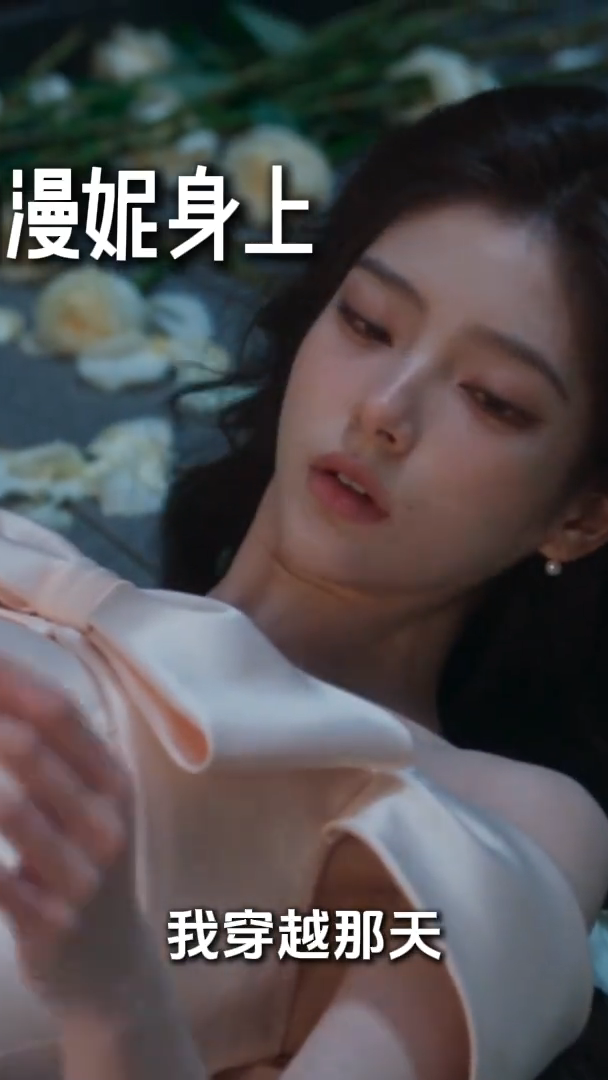
Chongqing Girl Becomes a K-pop Top Star is a time-travel revenge drama made with Jimeng AI: a mixed-martial-arts fighter from Chongqing wakes up as a bullied idol in a Korean girl group — and starts fighting back. On paper, it's a satisfying premise. But the most upvoted comment under the video — more than 9,600 likes — isn't applause. It's a question: "So the heroine has to fight in a bodycon dress... right?" followed by more than sixty replies. The runner-up (4,600 likes) is viewers guessing which real-world figure the show's China-US-Korea backdrop alludes to; third place (3,869 likes) is a joke: "Shocking! The revenge-drama heroine is my best friend!"
That 9,600-like question isn't really about the dress. It's about how she wins. The show bills itself as a group portrait of female growth, yet the costume logic of the fight scenes still looks designed for someone else's gaze. The viewers didn't call the plot bad or the production cheap — they asked one soft, devastating question, and inside it lives the real pass line for female-led revenge dramas: the way she wins has to grow out of the character herself, not out of someone else's gaze. Audiences don't object to satisfaction; they object to winning the scene while losing the life. Before time-travel, she was trapped by bullying; if after it even her victories must follow the old template, that's not breaking out — it's locking herself back in. As the meme that has flooded Chinese social media this month puts it: "I've drawn my prison on the ground, Lina" (hua di wei lao — "I have fenced myself in"), borrowed from the viral variety-show quote. Here it lands on one word: the bodycon dress.
And this scrutiny isn't nitpicking. Another comment in the same thread says: "Great plot, and — I can actually tell every member's face apart in a manhua-style drama! I used to rely on costumes and hair!" Over 1,500 likes went to viewers delighted by the Chongqing-flavored character names — Jin Jiaohuan ("Gold Whiner") and Piaor Bai ("Bok-choy"). The audience is grading in real time: AI finally made faces distinguishable, and they praise it instantly; the costume logic still runs on the old gaze,
Why Does the Heroine Fight in a Bodycon Dress? C-Drama Fans Have Started Asking the Writers
and they push back instantly. Sharper viewers even track what happens after the revenge: one comment with 58 likes notes the irony that the former victim becomes a bully once she has power. Put together, these are viewers more awake than the scripts assume.