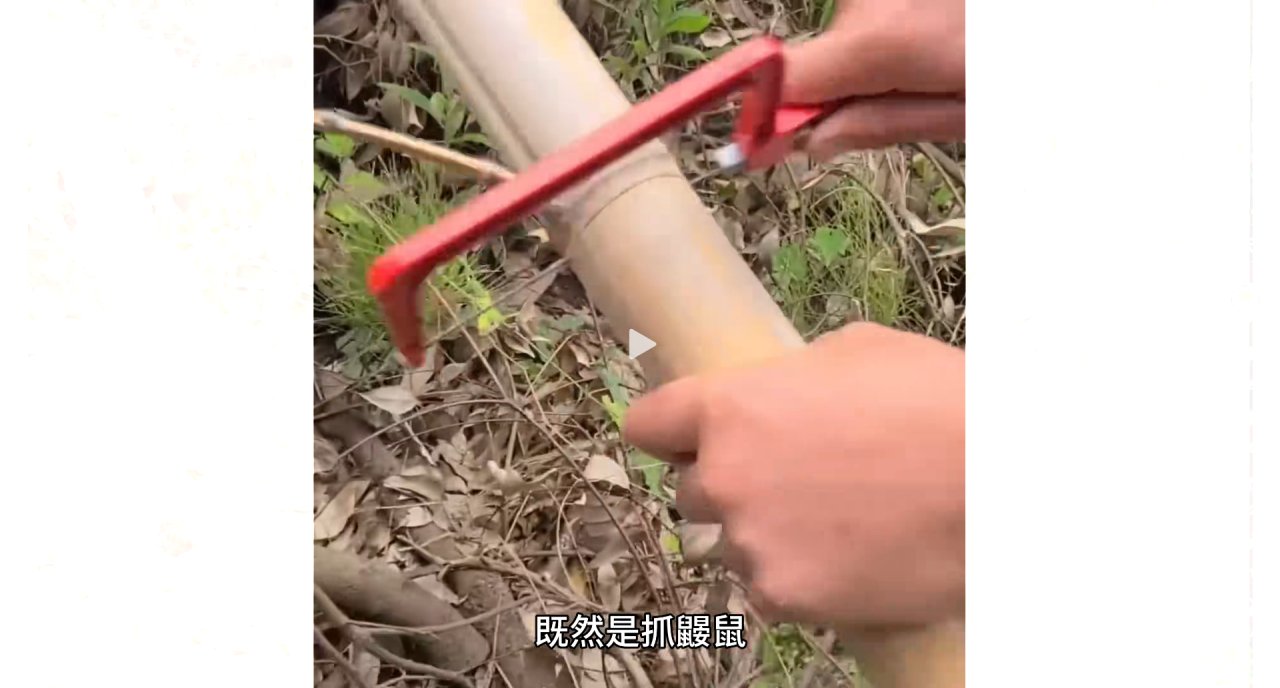
A pair of hands grips a bright red hacksaw, cutting into a bamboo pole that runs diagonally across the frame. The background is soft-focus wild grass and dry leaves, but the focus is sharp on the tool. The caption reads “Since we’re catching moles,” and the video title asks what it’s like to keep one as a pet. This isn’t a classroom experiment. It’s a first-person view of someone building a trap in the dirt, trying to understand a creature most people only see as a nuisance or a myth.
The comments section lights up with confusion and correction. One person points out that moles aren’t rodents. Another worries about plague. A third argues about whether the voiceover is AI-generated or if the blogger changed teams. There’s no single right answer here, just a lot of people looking at the same small screen and seeing different things. Some want to know how to feed them earthworms; others are skeptical they can survive captivity. The disagreement isn’t hostile—it’s curious. They’re trying to figure out where the line is between observation and intervention.
Misunderstanding the Creature
Most parents worry about safety when kids bring home wildlife. But the bigger issue is often accuracy. Moles (*Talpidae*) are insectivores, not rodents like mice (*Mus musculus*). They don’t eat grain; they eat grubs and worms underground. If a kid sees a mole video and assumes it’s a big rat, their questions will go off track.
The microscopic reality is simpler than the debate. Under a lens, you’d see the specialized teeth designed for gripping slippery prey, not gnawing wood. You’d see the lack of external ears, an adaptation for tunneling, not a defect. These details explain why keeping them as pets is difficult—they need specific soil conditions and live food that doesn’t spoil quickly. The app’s library helps clarify this by showing digitized slides of related specimens, letting the child compare structures without needing a real lab. It turns “why did he change the voice?” into “why does this animal look like this?”
What Parents Actually Ask
Three concerns come up repeatedly in these discussions. First: Is it safe? The fear of disease is real, though usually overstated for casual observation. Second: Can I replicate this at home? Building a trap requires tools and space many families don’t have. Third: Is this educational? Critics argue that watching a struggle for survival teaches nothing about biology.
Wwai addresses these by simulating the environment rather than replicating the risk. Instead of digging holes, the child opens the app and follows prompts. The AI tutor stays beside him, answering questions as they arise. If the kid asks why the mole has such strong claws, the tutor explains the mechanics of digging through soil density. If the kid asks about diet, the app shows simulated specimens of earthworms and larvae. The child checks the conclusion against his own observations. Sometimes the AI doesn’t have the exact answer, and that’s okay. It encourages the kid to look closer, not just accept the output.
Hands-On Curiosity
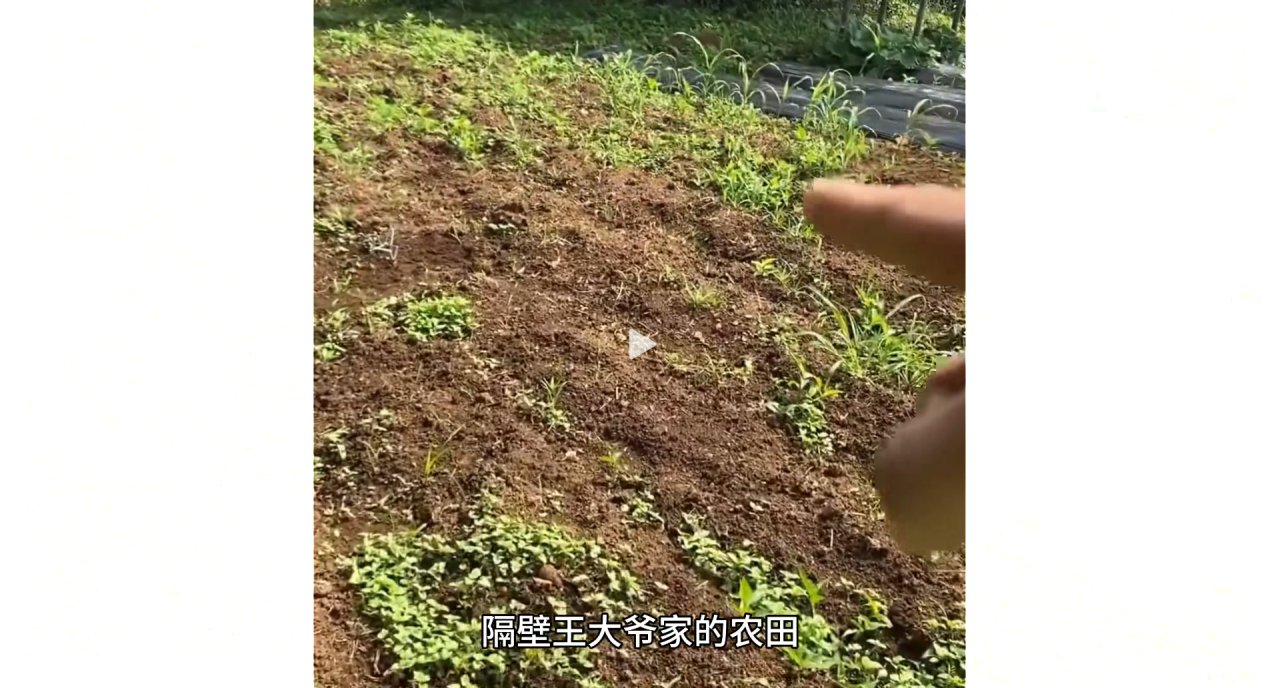
You don’t need a museum within walking distance to start. In small towns, curiosity often begins with what’s already outside. Try this: find a patch of disturbed soil in your yard. Look for ridges or mounds. Use a magnifying glass from a hardware store or a phone camera zoomed in. Note the texture of the dirt. Compare it to undisturbed ground.
This simple act mirrors the video’s intent—observing impact before intervention. It costs time, not money. The kid learns to ask better questions. Why is the soil loose here? Who made this? What do they eat? These are the seeds of scientific thinking, planted in ordinary backyard dirt.
What it takes | What the kid gets ---|--- Time spent observing local nature | Questions about ecosystem roles Access to a phone for simulation | Understanding of animal anatomy Patience for trial-and-error learning | Confidence in checking facts
The red saw remains in the frame, frozen mid-cut. The mole story continues in the comments, shifting from ethics to taxonomy to audio quality. Science isn’t a clean lecture. It’s messy, debated, and grounded in the physical world. The child looks at the screen, then at the dirt under his fingernails, and wonders what else is hiding there.