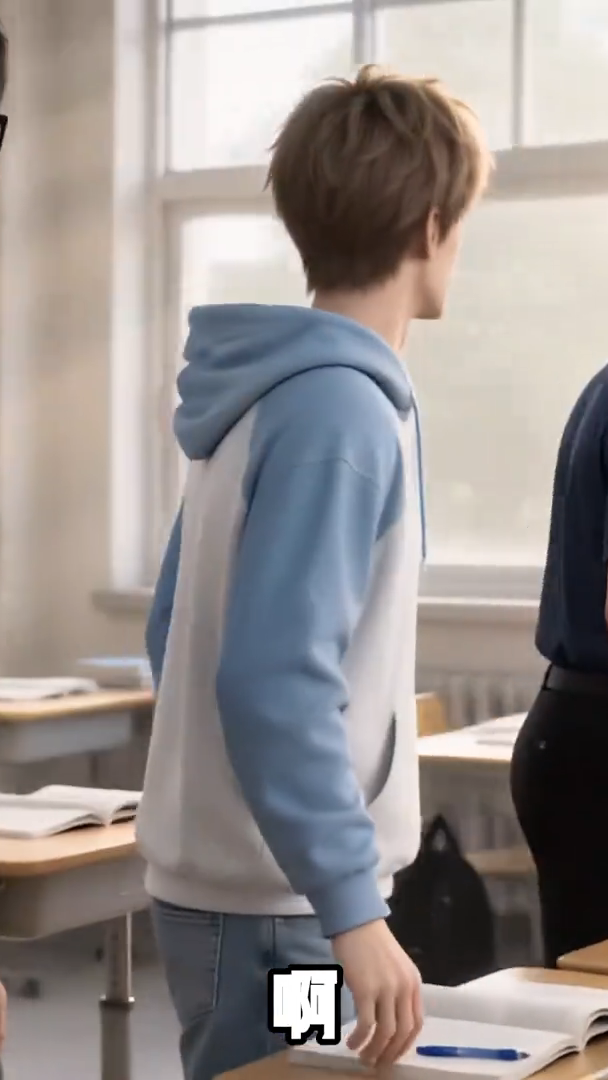
Episode 8 of the AI campus sitcom Zhuang Mo Er ("Putting on an Act") is about the smallest thing imaginable: a dormmate named Jiahao throws his underwear, socks and shoes into the shared washing machine — which still holds a roommate's white T-shirt. Caught red-handed, he argues his way out of it, and the dormmates decide to punish him. Yet the hottest comment under this episode isn't about the visuals or the AI. It's pure disgust: "Those underwear must have a patina by now" (baojiang — the internet slang for something unwashed so long it develops a "patina"), with more than 200 upvotes. The second-ranked comment seriously debates whether underwear worn seven days and flipped inside out counts as clean — with personal testimony attached. The third says, "I can't take this anymore, it's too uncomfortable, I'm about to swipe away" — and the creator replies underneath, “No, don't go, keep watching.”
Put those three comments together and the answer is already there. Nobody in the room cares whether the episode was AI-made. They care that the washing-machine incident happened in their dorm too. One viewer wrote that the snoring in the episode was so realistic that, wearing noise-cancelling earphones, he thought it was his own roommate; another said this is exactly why he never dares use the campus laundry. Not a single comment discusses the production tool. They are all claiming their own lives.
That act of claiming is the most valuable thing in an AI short drama. Look at the episode's structure and you'll see a textbook sitcom skeleton: a jarring small behavior (underwear, socks and shoes in one wash), a face-to-face confrontation, a shameless self-defense, a collective verdict. Four beats, conflict closed, and the audience's emotions get an outlet — disgust first, then taking sides, then waiting to see the punishment land. One commenter even continued the story with their own dorm's version: "We have someone at my school who washes like that too — underwear washed together with shoes and insoles, and he wouldn't admit it when caught." The episode ends; the story continues in the comment section. AI can generate classrooms, corridors and a hundred young faces, but it cannot generate the memory of the drum washing machine in your dorm. What the writer supplies is a specific enough scenario; the audience hooks themselves onto it.