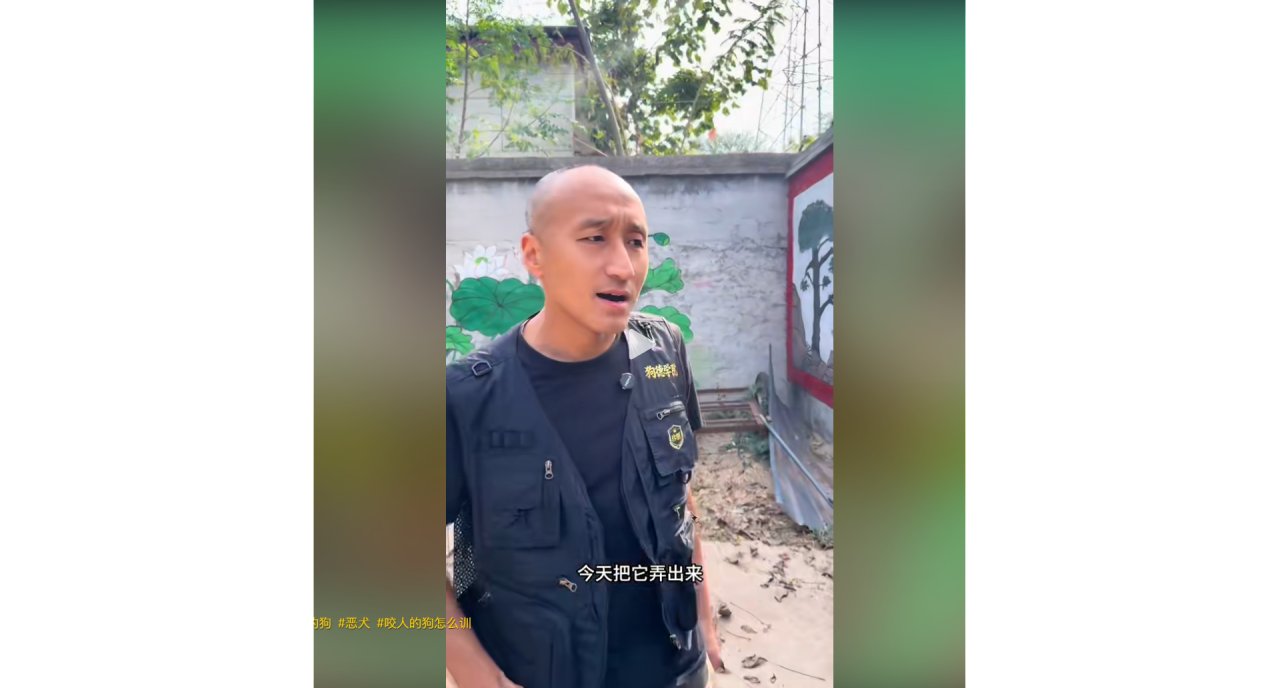
He stands in a dusty yard, wearing a black multi-pocket vest that looks more like gear for a conflict zone than a Tuesday afternoon. Behind him, a white brick wall features a painted lotus flower, soft and decorative, clashing with the tension in his shoulders. His expression is tight, mouth slightly open as if he’s about to speak or just finished shouting. The subtitle on the screen reads, “Today I’ll get it out.”
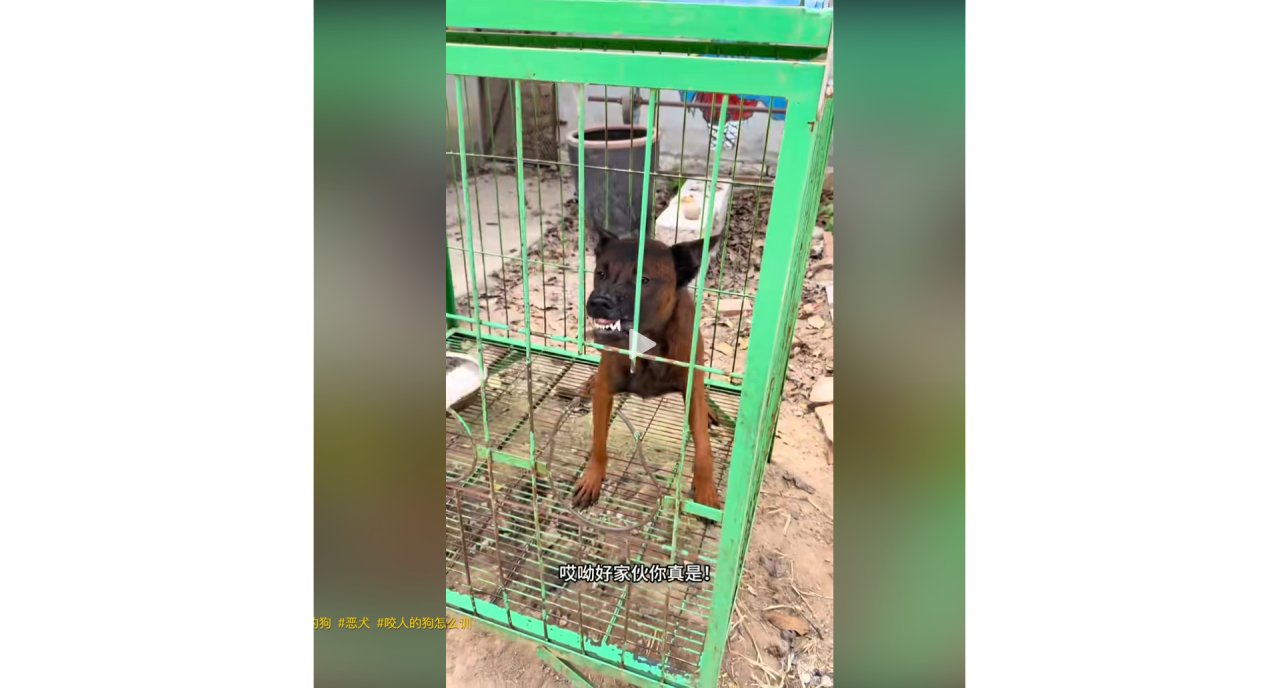
The caption below tells you why: this dog bit six people in two months. The comments are a storm of advice and horror. Some suggest starving it; others joke about sending it to the meat truck. One user writes, “Say that when it bites your kid,” capturing the raw fear many parents feel. Another notes, “The dog you trained only fears you; it still bites.” It’s a stark reminder that control isn’t always understanding, and that aggression often hides something deeper than malice.
Behavior is not obedience
We tend to think of training as making an animal do what we want. But behaviorists look at *why* the animal does what it does. That Malinois in the video isn’t just being bad; it’s reacting to stimuli, perhaps fear, perhaps territorial instinct. When the trainer puts on the heavy vest, he’s managing risk, but he’s also creating distance. The dog sees the gear and reacts. The human sees the reaction and adjusts. It’s a loop of cause and effect that happens too fast for casual observation.
Parents watching this might wonder how to teach their own kids to read such signals. How do you explain that a growl isn’t just noise, but data? Or that a stiff tail means stop? These are questions of pattern recognition, similar to identifying shapes in chaos. You don’t need to be a vet to understand that context changes meaning. A bark at the door is different from a bark at a squirrel. Recognizing these nuances is a skill, one that can be practiced safely.
Seeing the unseen
This is where Wwai comes in. It doesn’t replace the real world, but it lets a child pause it. On a phone screen, a simulated microscope view allows a kid to zoom in on a specimen slide—maybe a patch of skin bacteria or a drop of pond water. There’s no glass to break, no chemicals to spill. The AI tutor walks