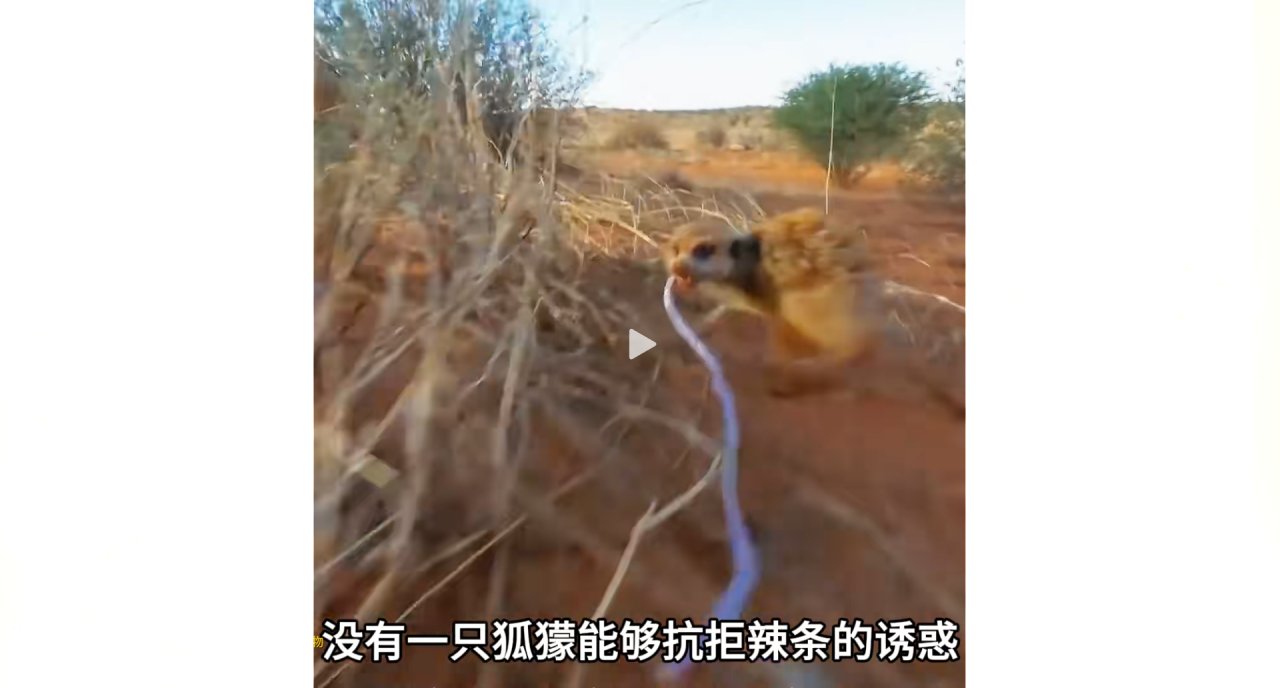
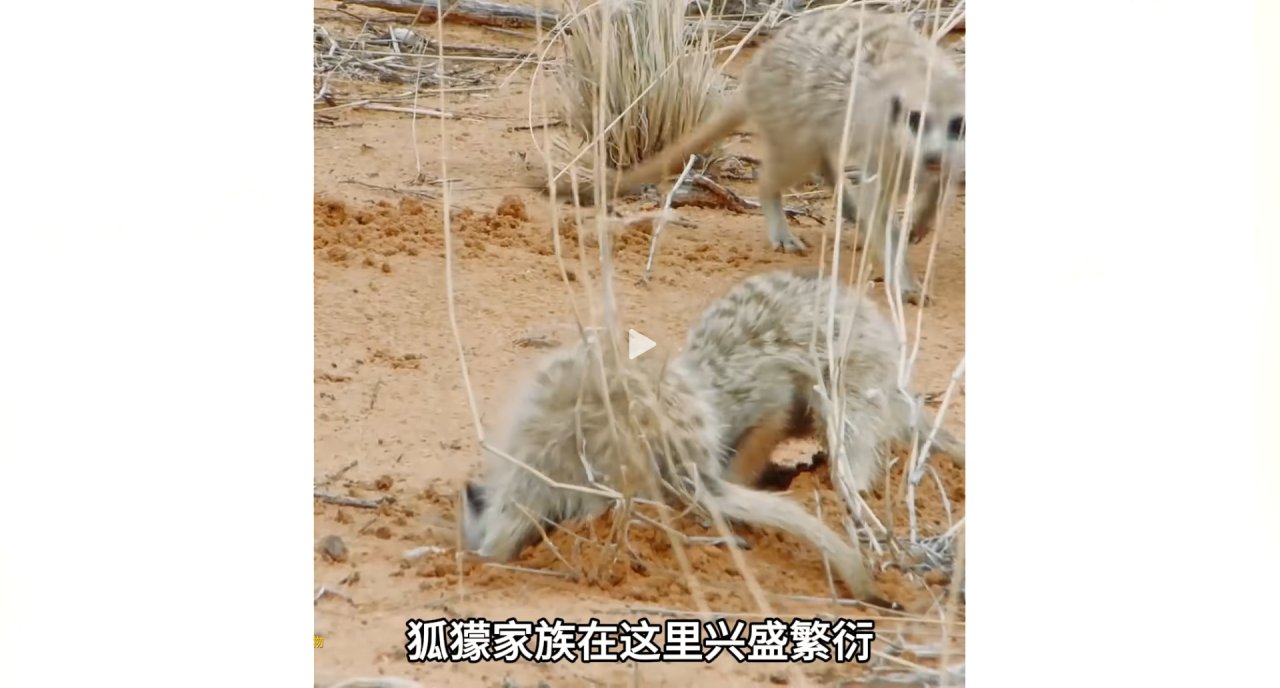
The screen shows three meerkats (*Suricata suricatta*) on dry, yellow-brown sand. One is foraging, head low, stepping carefully. Another has its rear end in the air and its face buried deep in a mound, digging with a frantic energy that looks less like science and more like comedy. The third stands alert in the sparse grass, watching the horizon. A white subtitle at the bottom reads “Meerkat family thrives here.” It’s a snapshot of survival, messy and vibrant.
What the Comments Say
People don’t just watch; they argue. One comment notes, “But that drongo still tricks them!” referring to the bird that steals their food. Another asks, “Isn't he supposed to eat spicy strips?” confusing the wild animal with a human snack. There’s worry too: “Isn't this thing worried about parasites?” And admiration: “Timon and Pumbaa never lied to me.”
The confusion is real. Some think it’s a marmot. Others ask if keeping one as a pet is viable, quickly realizing the cost starts from four digits. But the core question remains: why do they dig? Why do they stand guard? Why do they seem so happy to be covered in dirt?
Seeing the Unseen
We can’t see the parasites or the venom resistance mentioned in the comments. We can’t see the social bonds that keep the family thriving. But we can look closer at what they’re doing. The digging isn’t just play; it’s engineering. They create tunnels that regulate temperature, hiding from the sun and predators alike. The standing alert isn’t just posture; it’s communication.
This is where Wwai comes in. It’s not a replacement for the field, but a way to pause the video and zoom in. The kid opens the app, selects a specimen slide, and the AI tutor walks him through what’s on screen. He doesn’t get a lecture; he gets a guide. If he asks why the meerkat’s fur looks gray-white, the tutor explains light reflection and insulation. If he asks about the scorpions they eat, the tutor clarifies how some venoms are protein-based and how digestion works. Sometimes, the tutor says, “I’m not sure,” and suggests checking the conclusion together. It’s honest, not omniscient. Parents often have three specific worries when looking at these kinds of tools. First, “Is this just a toy?” The answer is no, because it simulates real microscopy. You aren’t playing with pixels; you’re examining digitized slides of actual biological structures. Second, “Will it replace school science?” No. It’s a supplement, a place to go deeper when curiosity strikes at home. Third, “Is it safe?” Yes. No glassware, no chemicals. Just a phone and a mind. You don’t need a lab to start thinking like a meerkat. Go outside. Find a patch of bare earth. Look for small holes. Don’t touch them yet. Watch for ten minutes. See if anything moves in or out. Notice the shape of the entrance. Is it smooth? Rough? Does it have a pile of fresh soil nearby? Then, bring it inside. Open Wwai. Compare your observation with a simulated cross-section of a burrow. See how the walls are structured. Ask the tutor why moisture matters. It turns a walk into an inquiry. It’s evening. The kitchen is quiet. Your kid is holding the phone, showing you a slide of a beetle’s leg. You’re leaning over his shoulder, pointing at a joint. “That’s for gripping,” you say. He nods, then asks, “What about the claws?” You don’t know. You both look at the screen. The tutor answers. You laugh at the complexity of something so small. There’s no grade attached. No test. Just two people looking at the same detail, trying to understand it. I remember being eight, standing in a museum, pressing my nose against glass cases filled with preserved insects. I couldn’t move them. I couldn’t ask them questions. Now, a kid in a suburb can hold a simulation in his hand. He can rotate it, zoom in, ask why. The distance between wonder and understanding has shrunk, not because we know everything, but because we can ask better questions.Three Hesitations
Try This at Home
The Family Moment
Distance and Memory