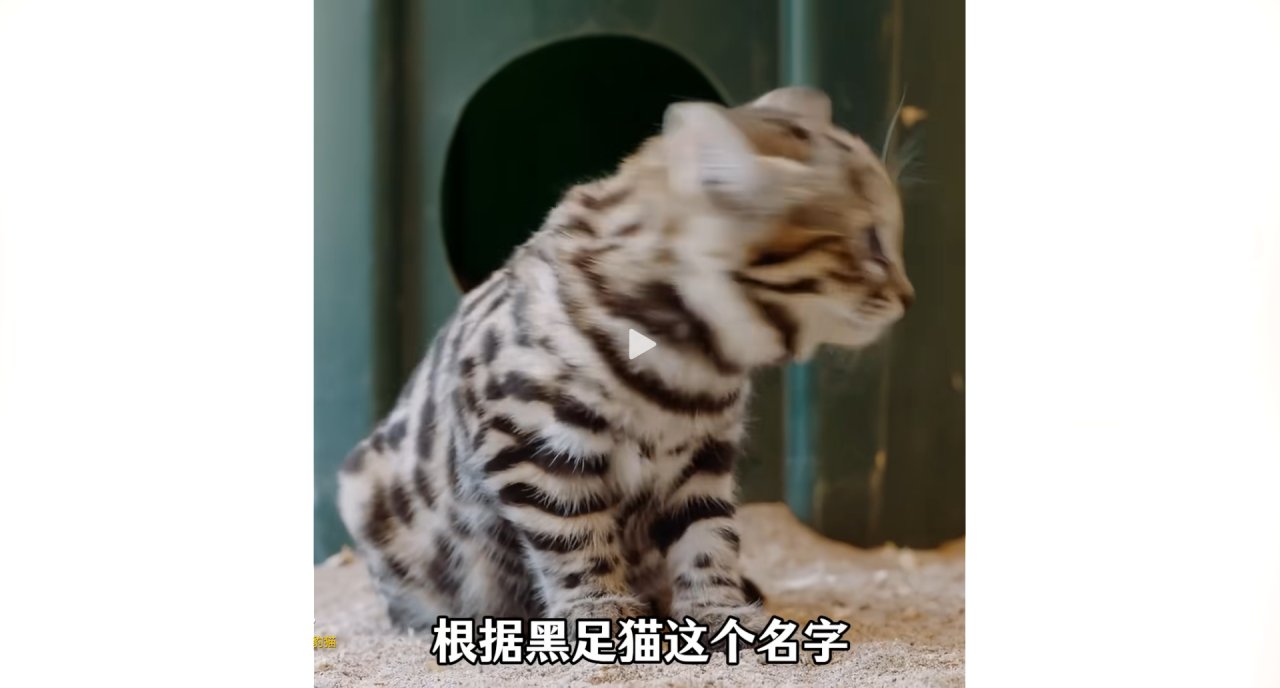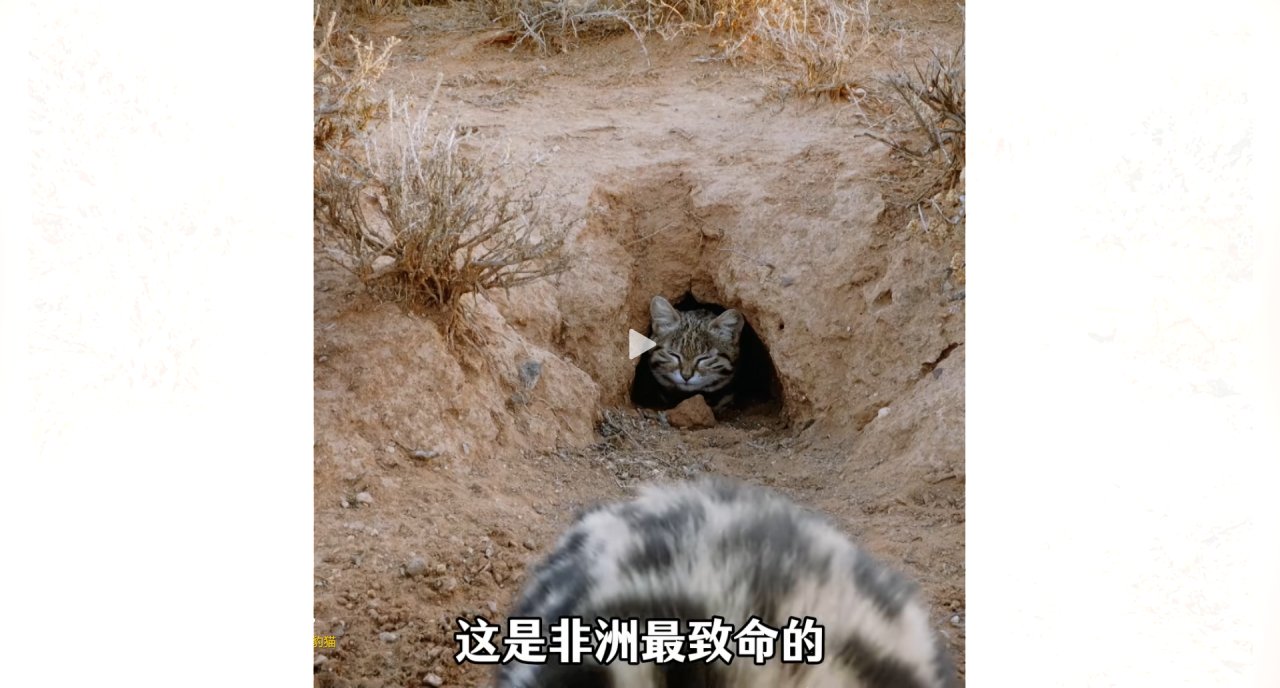
The video pauses on a black-footed cat, *Felis nigripes*, sitting in a green tube. Its fur is pale yellow with dark spots, and its face is blurred by motion as it turns to look at something off-screen. The caption reads, “Black-footed cat: I am the most deadly killer in the cat family! Fishing cat: So can you catch fish?” It’s a moment that stops the scroll. You see the alertness in the ears, the soft fluff of the body, and then the text hits you with a contradiction. This small, cute thing claims to be a lethal hunter, yet another cat asks if it even knows how to swim for dinner.
What makes a predator deadly
Parents often worry that science content needs to be serious or complex to be valuable. But this clip shows how curiosity starts with a mismatch between expectation and reality. We assume “deadly” means big teeth and huge size. The comments reveal the confusion: one person notes the high success rate, while another jokes about their own pet begging for food. The black-footed cat isn’t deadly because it fights lions; it’s efficient because it hunts small prey like insects and rodents, where every calorie counts. The naked eye sees a kitten. The context reveals an engineer of energy conservation. When a child sees this, they aren’t just looking at a cat; they’re seeing a system where being small doesn’t mean being weak.
Turning questions into exploration
This is where Wwai comes in. A kid doesn’t need to memorize facts about *Felis nigripes*. Instead, he opens the app and finds a specimen slide of a similar small mammal’s paw pad or muscle tissue. He follows the prompts, zooming in on structures that explain why such a small animal can move so quietly and strike so fast. The AI tutor stays beside him, not lecturing but asking, “What do you think this texture helps with?” If the answer isn’t clear, the tutor admits it and suggests looking closer at the next layer. The child checks the conclusion against what he sees, turning a passive video watch into an active investigation of form and function.