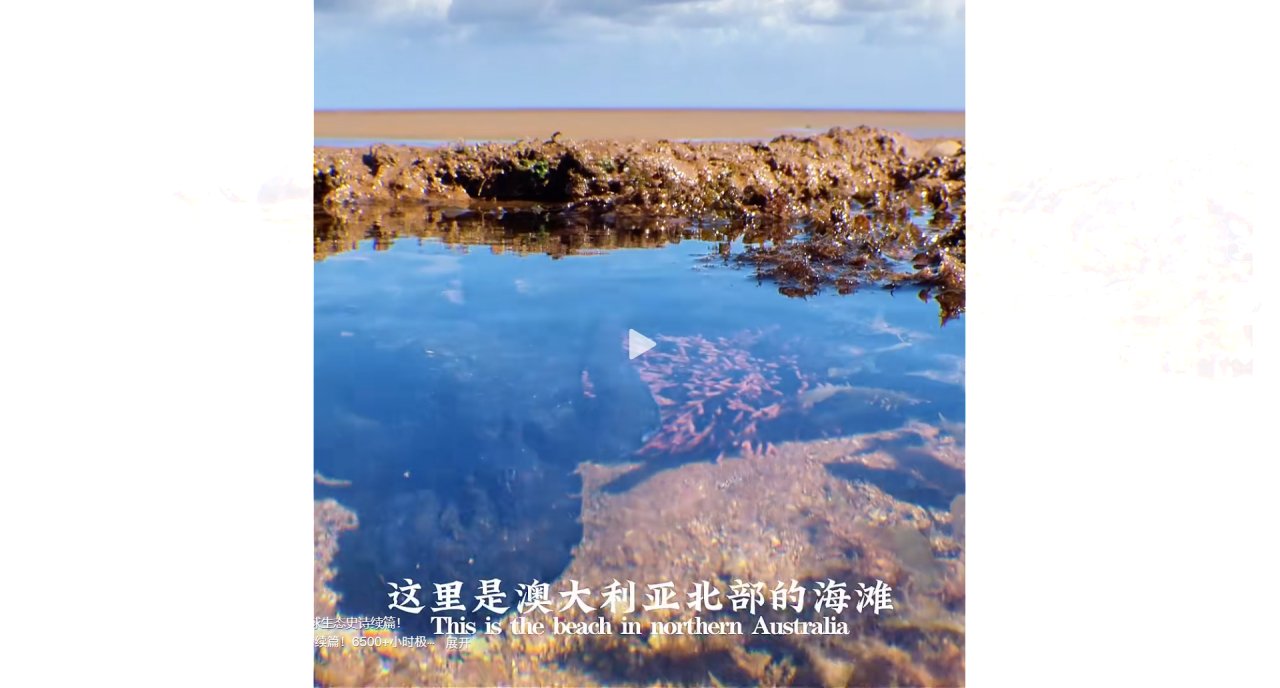
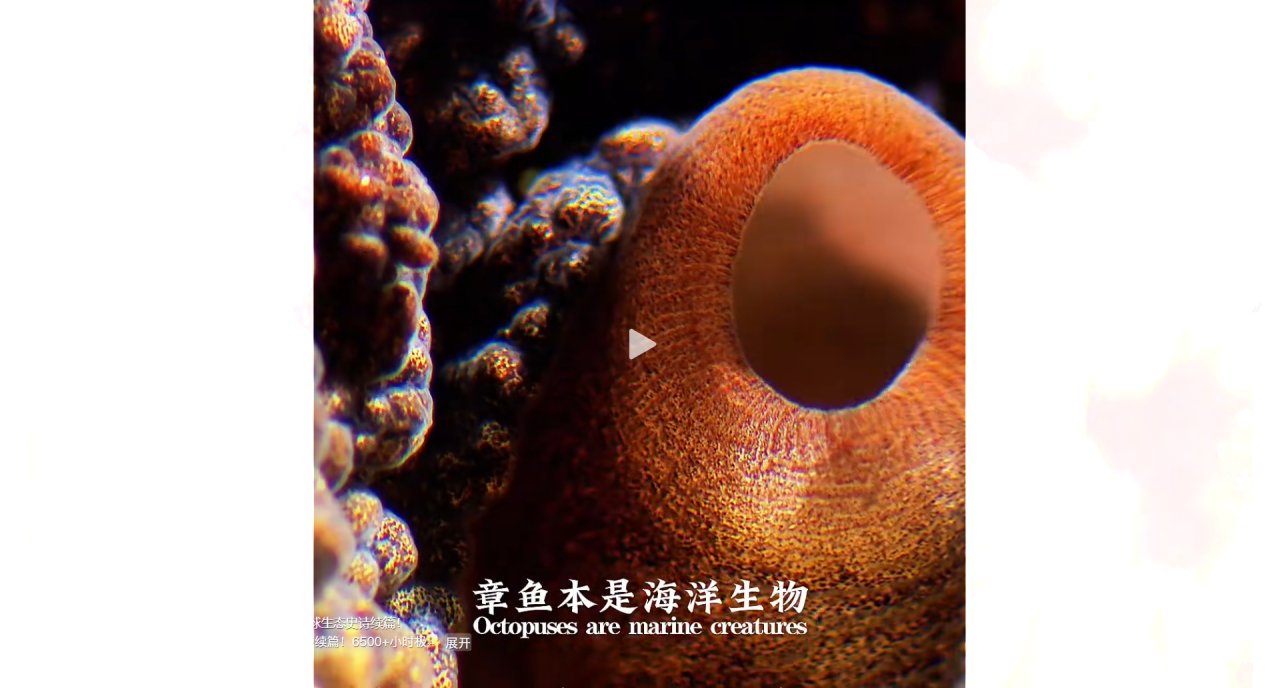
The phone screen freezes on a single frame. It’s not a blurry mess of pixels, but a sharp, startling close-up of an octopus eye. The iris is a warm orange-brown, textured like polished wood or velvet, catching a side light that makes it glow. The pupil is a horizontal rectangle, dark and deep, staring back with a calm, alert intensity that feels almost human in its alienness.
Below the eye, the skin is rough, covered in granular bumps that shift between ochre red and purple-gray. The depth of field is shallow; the rest of the body blurs into soft color blocks, forcing your attention onto that one gaze. A semi-transparent play button sits right in the center, hovering over the creature’s face. The subtitle at the bottom reads “Octopuses are marine creatures,” simple and factual, yet the image itself carries a weight of mystery. It’s a moment where science meets awe, captured by a camera that seems to have been hiding just inches away.
Who Filmed This?
Parents often wonder how such clarity is achieved without disturbing the animal. Comments ask if it’s an undercover camera or a realistic robot. The truth is likely a mix of patience and technology. In these documentaries, crews spend hundreds of hours waiting for the right light, using lenses that can focus from extreme distances to macro shots. The octopus doesn’t know it’s being watched; it’s just living its life, hunting or resting. The camera captures what was always there, hidden by the opacity of water and the speed of movement.
Why Soft Skin Matters
You might notice the texture of the skin in the screenshot. Octopuses are mollusks, specifically cephalopods, lacking the hard shells of clams or snails. This softness allows them to squeeze through tiny spaces, a survival trait that confounds predators. Their
skin isn’t just smooth; it’s packed with chromatophores, pigment cells that expand and contract to change color instantly. To the naked eye, this looks like magic. Under magnification, you see the muscle fibers pulling each cell open, revealing yellow, red, or brown pigments. This mechanism explains why they vanish against coral reefs so effectively.
Three Hesitations
First, parents worry about fear. One comment says, “I’m afraid of soft things.” It’s okay to be unsettled by textures that aren’t familiar. Science doesn’t require comfort, only curiosity. Second, there’s skepticism about authenticity. Is this real? Yes, the behavior shown—alertness, camouflage—is documented biology. Third, some feel disconnected from nature. Living far from the coast makes marine life abstract. But the principles of adaptation apply everywhere, even in a backyard pond.
What it takes | What the kid gets --- | --- A few minutes of quiet time | A visual anchor for biological concepts No special equipment | Confidence in asking “why” questions An open mind | Connection to global ecosystems
Seeing Closer Than Screens
While videos show the result, understanding the process requires looking closer. Wwai offers a way to simulate this exploration safely. Instead of fragile glass slides or chemical stains, the app uses digitized specimen libraries. A child can zoom into a sample, watching the AI tutor walk them through what they’re seeing. If they ask about cell structures, the tutor explains the visible features, admitting when data is limited. It’s not a replacement for a lab class, but a companion for curiosity. The child controls the pace, pausing to think, resuming to learn, turning passive viewing into active inquiry.
Try It at Home
You don’t need high-tech gear to start observing. Look at your own hands under strong light. Can you see the tiny ridges on your fingertips? These are fingerprints, unique to each person. Now, look at a leaf. Are the veins symmetrical? Use a magnifying glass if you have one. Notice how the surface changes texture up close. Compare it to the octopus skin in the video. Both have patterns designed for function—grip or camouflage. This simple act shifts perspective from general to specific, training the eye to look for details others miss.
The play button remains paused. The eye stays fixed. The question hangs in the air, waiting for someone to lean in closer.