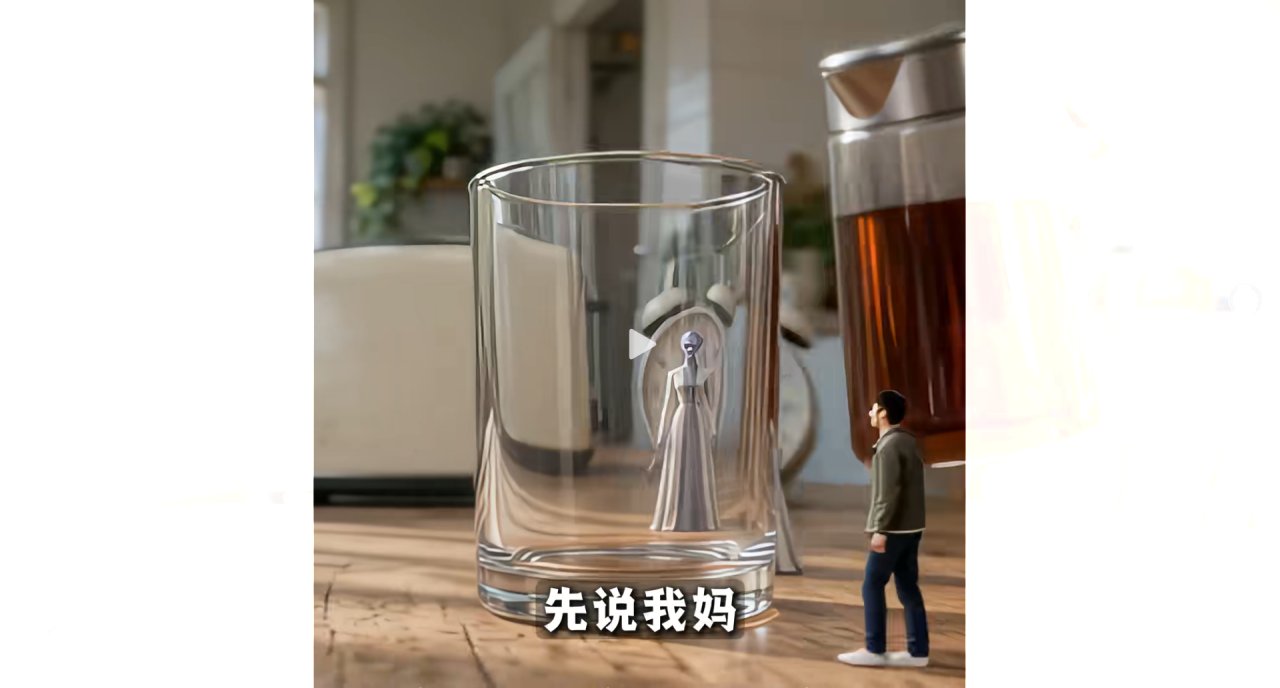
You’re standing at the kitchen counter, a glass teapot hovering in your hand. To you, it’s just Tuesday afternoon tea. But look closer at the scene playing out on the screen in front of you—or perhaps imagine it if you were looking through a lens small enough to see the dust motes dancing in the steam.
There’s a man, no taller than a grain of rice, wearing a dark green jacket and white sneakers. He stands on the wooden table, neck craned upward, watching that same teapot tilt. From his perspective, the pouring liquid isn’t a stream; it’s a roaring waterfall of amber heat. The window light behind him is blinding, casting long, distorted shadows across the wood grain. This isn’t just a visual trick. It’s a shift in scale that changes everything about how we perceive risk, temperature, and time. When we talk about “staying young,” we often think in terms of what goes into our bodies, but rarely do we stop to consider the sheer magnitude of those inputs relative to the tiny biological machinery trying to process them.
Coffee, Tea, and the Aging Question
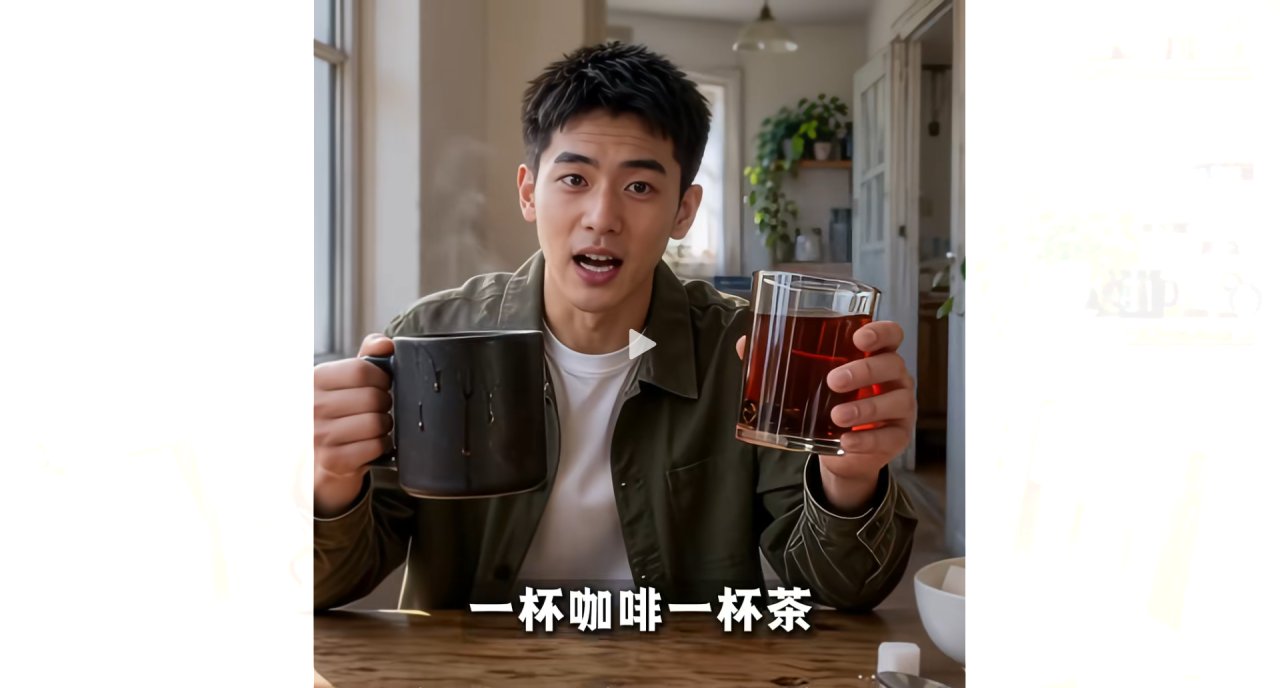
The debate over whether coffee or tea keeps you younger is loud online. Comments sections are filled with confident prescriptions: “Light roast Americano in the morning, Oriental Leaf tea in the afternoon.” Others warn about palpitations or stomach issues. One user even suggested brewing coffee with green tea leaves, a mix that sparked both curiosity and skepticism.
But here’s the thing: the science doesn’t support a single winner. It supports nuance. Chlorogenic acid in coffee and catechins in tea are antioxidants, yes, but their effects depend entirely on individual constitution. Some people metabolize caffeine slowly; others don’t. The “anti-aging” myth often oversimplifies these complex biochemical interactions. What matters less is which bean you choose and more is how your body handles the load. If you’re drinking three cups a day and feeling jittery, the “health benefit” becomes stress. If you’re sipping plain water because you’re afraid of both, you might be missing out on compounds that actually help repair cellular damage. There is no universal formula, only personal tolerance.
Seeing the Invisible
This is where the view changes. You can’t see chlorogenic acid breaking down, nor can you watch tannins binding to proteins in your gut. These are molecular events happening at a scale invisible to the naked eye. In the Wwai app, a kid can pull up a simulated specimen slide—say, a cross-section of a leaf or a drop of brewed liquid—and zoom in until the structure reveals itself. The AI tutor walks him through what he’s seeing, not by lecturing, but by asking, “What does this texture remind you of?”
He isn’t replacing a real microscope or a chemistry class. He’s practicing the act of observation. When he sees the difference between the porous structure of a coffee bean and the fibrous layout of a tea leaf, the abstract concept of “extraction” becomes concrete. He learns that flavor and health compounds aren’t magic; they’re physical things moving through space. And when he hits a question the AI can’t answer, he learns that too. Science isn’t a database of facts; it’s a method of checking.
Three Reservations Parents Voice
“Is this just another gadget?” No. It’s a tool for asking questions. Unlike a toy that has one function, Wwai opens up endless inquiries. If the kid asks why the tea turns brown, the simulation shows oxidation. If he asks why coffee tastes bitter, it shows compound interaction. It follows his lead.
“Will it distract from schoolwork?” It’s designed for short bursts of curiosity, not marathon study sessions. Many parents find that spending ten minutes exploring a microscopic view helps reset a child’s focus before returning to homework. It’s not about adding pressure; it’s about offering a different kind of mental rest.
“What if I don’t know the answers?” That’s the point. You’re not supposed to be the expert. The app provides the context, and you provide the conversation. You can say, “I don’t know, let’s look it up together.” That shared uncertainty is often more valuable than a correct fact.
Two Ways to Look
One approach is passive consumption: watching videos about health hacks, accepting the advice of strangers in comment sections who claim to have found the secret to eternal youth. This path offers quick answers but little understanding.
The other is active inquiry: using tools like Wwai to visualize the mechanisms behind the claims. Instead of trusting that “green tea cools the body,” a kid can explore the thermal properties of liquids or the chemical reactions involved. This path is slower, messier, and sometimes confusing. But it builds a foundation of critical thinking that lasts longer than any trend.
A Quiet Afternoon
The sun dips lower, stretching the shadow of the teapot across the table. The tiny observer in the simulation looks up, still waiting for the drop to fall. On the phone screen, the kid pauses, tapping back to the main menu, then forward again, just to see the reaction one more time. He doesn’t need to decide yet which drink is better. He just needs to understand how they work.